





Presbyopia and eyestrain
Presbyopia, also called age-related farsightedness, is a natural change in the eye that affects almost everyone sooner or later. It typically becomes noticeable around the age of 40: it becomes difficult to focus up close, you extend your arm to read, and small print appears blurry. It is not a disease. It is compensated for with an optical solution tailored to each person.
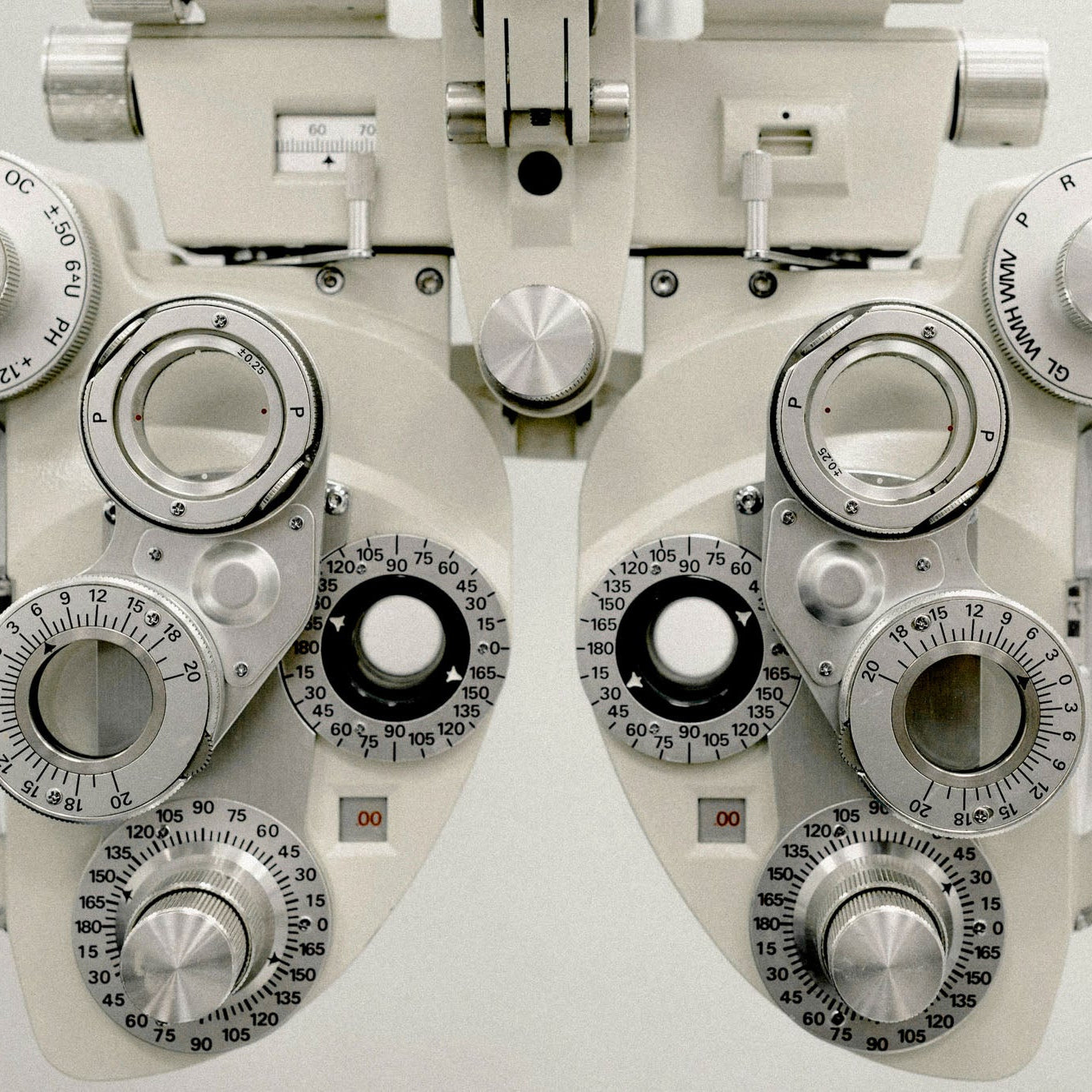
Symptoms of presbyopia or tired eyes
In addition to difficulty focusing up close, presbyopia has other signs that are not always associated with vision:
- 1. Eyes tire more quickly. Reading or working with screens feels more difficult by the end of the day.
- 2. You need more light to see up close. What you used to read without thinking now requires a lamp.
- 3. Headache at the end of the day. Due to the continuous effort to focus.
If you recognize yourself in any of these, an eye exam will clarify it.

When presbyopia appears and how it develops
The lens, the eye's natural lens, loses elasticity with age. This is what makes it difficult to focus up close. The change is gradual: it starts subtly and becomes more noticeable between the ages of 45 and 60, when it usually stabilizes. It does not depend on how much you have read or the time you spend in front of screens: it is part of the natural aging of the eye.

Presbyopia with myopia, astigmatism or hyperopia
Yes, it is common to have presbyopia along with another vision problem. It usually appears on top of something that was already there: myopia, astigmatism or hyperopia. It is not a complication, it is a combination that is treated in a single check-up.
Astigmatism and presbyopia
Astigmatism causes blurred vision at any distance. When presbyopia is added, discomfort up close is more noticeable. The prescription must take both into account.
Myopia and presbyopia
If you had myopia, you may now see worse up close with your usual glasses or you may need to take them off to read. The two conditions coexist and are corrected at the same time.
Hyperopia and presbyopia
Hyperopia and presbyopia share a symptom (poor near vision), but they are different. When they overlap, near vision becomes more demanding sooner than in other people.
Each combination has its own way of being corrected. The optometrist decides during the check-up, looking at everything at once instead of each problem separately.
How presbyopia is corrected
Presbyopia is not curable, but it can be compensated for. There are several ways to do this, and the one that fits depends on how you use your vision in your daily life.
- 1. Progressive lenses. The most common option. A single pair of glasses for near, intermediate, and far vision.
- How progressive lenses work⟶
- 2. Reading glasses. Only for near vision. They work when you don't need distance correction.
- 3. Multifocal contact lenses. An alternative for those who prefer not to wear glasses.
- 4. Refractive surgery. It exists, but it's a medical decision, not an optical one. It's evaluated in an ophthalmology clinic, not an optical shop.
The choice is not universal: it changes according to your prescription, your activity, and what you find comfortable. That's what the optometrist looks at during an examination.
How presbyopia is treated
If you recognize yourself in several symptoms, here are two ways to proceed.
The most common optical solution for presbyopia.
Learn about our in-office procedures and what the eye exam includes.
Frequent questions
Is presbyopia the same as eyestrain?
Yes, they are the same thing. "Presbyopia" is the technical term; "age-related farsightedness" or "tired eyes" are common names. Both refer to the same natural process: the progressive loss of the eye's ability to focus on close objects.
What's important not to confuse is presbyopia with eye strain, which is temporary eye fatigue (due to screens, prolonged reading) and goes away with rest. Presbyopia does not go away with rest.
Can presbyopia be cured?
No, but it's manageable. Presbyopia is a natural process of the eye, not a disease. There's no treatment to reverse it, but optical solutions (progressive glasses, reading glasses, multifocal contact lenses) allow for clear vision at all distances.
Can presbyopia be corrected with surgery?
Yes, surgical options exist. Refractive surgery with intraocular lenses is the most common option for presbyopia. It is a medical, not optical, decision and is evaluated in an ophthalmology clinic.
Most people resolve presbyopia with progressive glasses or contact lenses, without the need for surgery. If you are interested in the surgical option, we can guide you through the usual path starting with a visual examination.
At what age does presbyopia appear?
It usually begins to be noticeable between 40 and 45 years of age. The change is gradual and stabilizes around 60. Each person notices it at their own pace, but the process is the same: the lens loses elasticity with age.
How often should I get my eyes checked if I have presbyopia?
After 40 years of age, a visual check-up every one or two years is advisable. If you already have presbyopia, it is recommended to have a check-up at least once a year, as your prescription may gradually change.
At Miller & Marc, the eye exam is free and without obligation to purchase.
Can I have presbyopia and myopia (or astigmatism, or hyperopia) at the same time?
Yes, it's common. Presbyopia appears on top of previous visual defects you already had. It's not a complication; it's a combination that is resolved with a prescription that takes both into account at the same time.
Are presbyopia and hyperopia the same thing?
No, they are different things. Hyperopia is a refractive error that one has from a young age (the eye focuses behind the retina). Presbyopia appears with age and is due to the lens losing elasticity. They can coincide, and when they do, the symptoms are more intense.
Are progressive lenses the only option?
No, there are several options. Progressives are the most commonly used because they cover near, intermediate, and far vision in one pair of glasses. But reading glasses (near vision only), multifocal contact lenses, or, in some cases, surgery, also work.
Does presbyopia worsen over time?
Yes, it gradually progresses until around 55-60 years of age, when it usually stabilizes. In the early years, it may go unnoticed; over time, the difficulty with near vision increases until the prescription settles.
