





Presbyopia with myopia, astigmatism, or hyperopia
It is common to have presbyopia along with another vision problem. Presbyopia appears with age and is added to refractive errors you may already have: myopia, astigmatism, or hyperopia. Each combination manifests differently and requires a prescription that takes everything into account at once. It is not a complication; it is normal after age 40 and can be resolved with a single check-up.
How Combinations Manifest
Each combination of presbyopia with another vision problem has its own signs and considerations. It is important to recognize them to understand what is happening:
1. Astigmatism and Presbyopia
Astigmatism causes blurry vision at any distance, not just up close. When presbyopia is added, close-up vision becomes even more difficult to focus.
Common signs include: small letters appearing "doubled" or out of focus, increased difficulty reading in low light conditions, and eye strain appearing sooner than in people without prior astigmatism.
The prescription must correct both at the same time: astigmatism in its corresponding axis, and presbyopia with the necessary add for near vision.
2. Myopia and Presbyopia
If you've had myopia all your life, you're likely noticing strange things when wearing your usual glasses: with them on, close-up vision starts to look worse. Some people choose to take them off to read, while others need to adapt to new correction.
Presbyopia and myopia coexist without canceling each other out. Myopia does not "compensate" for presbyopia, although it may sometimes seem that way. What happens is that the myopic eye focuses differently, and when the difficulty of focusing up close is added, the glasses that worked for everything are no longer sufficient.
The solution usually involves a correction that covers near, intermediate, and distance vision simultaneously.
3. Hyperopia and Presbyopia
Hyperopia and presbyopia share a main symptom (difficulty seeing up close), but they are different things: hyperopia is a refractive error present at birth, presbyopia appears with age.
When they overlap, close-up vision becomes demanding sooner than in other people. Many hyperopes notice presbyopia as early as 38-40, before the average. And the necessary prescription is greater than in "pure" presbyopia.
It is important to differentiate them during the eye exam because the correction is not the same: in one case we compensate only for presbyopia, in the other we compensate for hyperopia + presbyopia.
How presbyopia is resolved with other vision problems
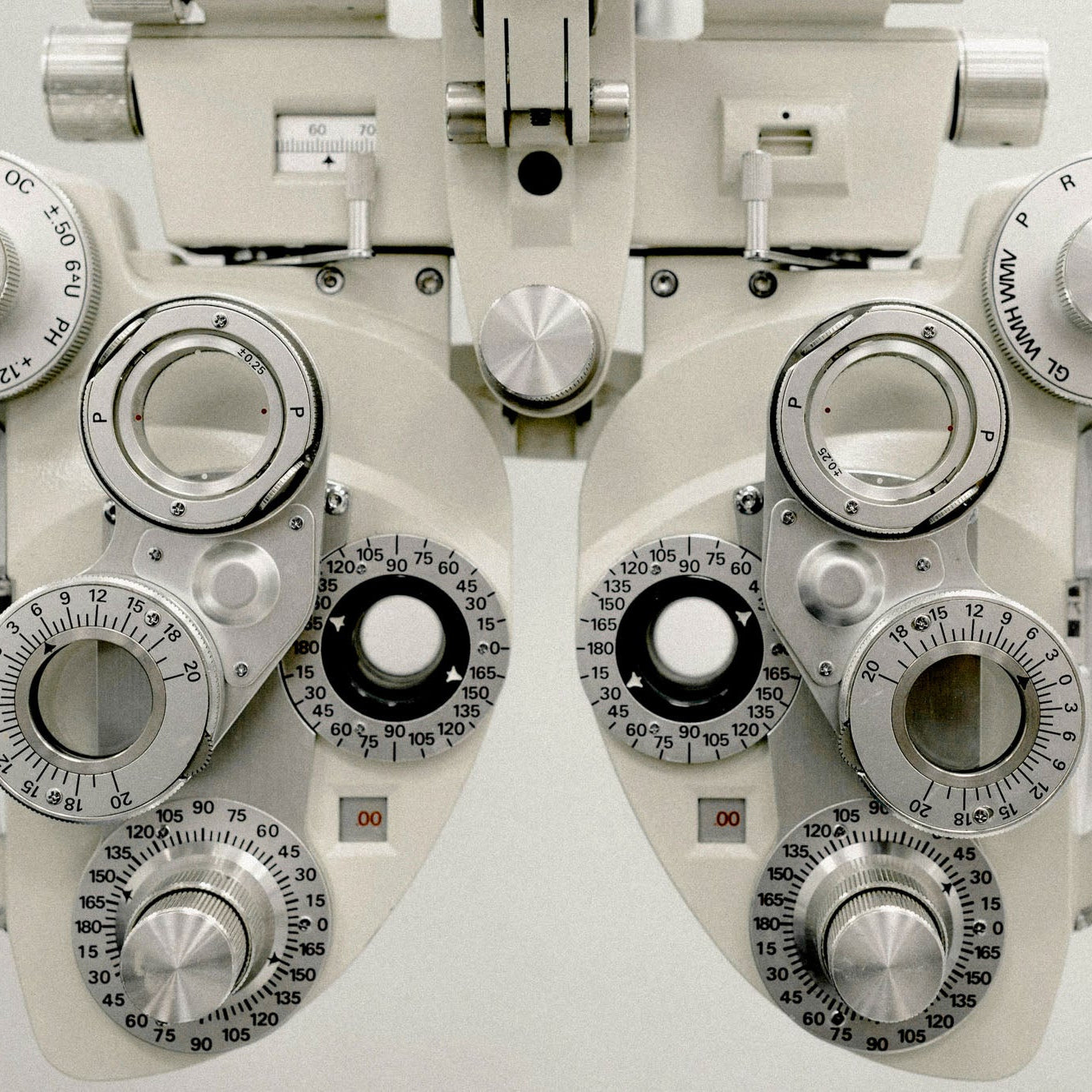
Presbyopia combined with another refractive error is always resolved by looking at everything at once, not each problem separately. This is what makes the difference compared to "pure" presbyopia.
In practice, the most commonly used solutions are progressive lenses, which cover near, intermediate, and far vision in a single pair of glasses and allow for the incorporation of astigmatism, myopia, or hyperopia correction. Multifocal contact lenses also work for some profiles.
The choice depends on your prescription, your daily activity, and how the vision problems coexist. This is what the optometrist looks at during the examination: not just what you have, but how your eyes behave as a whole. consultation and what the eye exam includes.

How to confirm your case
Each combination has its own particularities. Two ways to proceed:
What our visual review is like
Learn how we work in consultation and what the visual exam includes.
The most common optical solution for presbyopia.
Frequent questions
Can I have presbyopia with myopia, astigmatism, and hyperopia at the same time?
Yes, although it's not the most common. You can have myopia or hyperopia + astigmatism + presbyopia. Each combination is treated as a whole during a single examination, with a prescription that considers all defects.
Does myopia delay presbyopia?
It doesn't delay it, but sometimes it seems to. Some nearsighted people notice the first symptoms of presbyopia less because they can remove their glasses to read. Presbyopia still takes its course: what changes is how it manifests and is compensated for.
If presbyopia appears over myopia or hyperopia, do I need to change my glasses?
In most cases, yes. The glasses that worked before no longer cover the new near vision difficulty. The usual solution is progressive lenses, which combine the previous correction with the presbyopia addition in a single lens.
